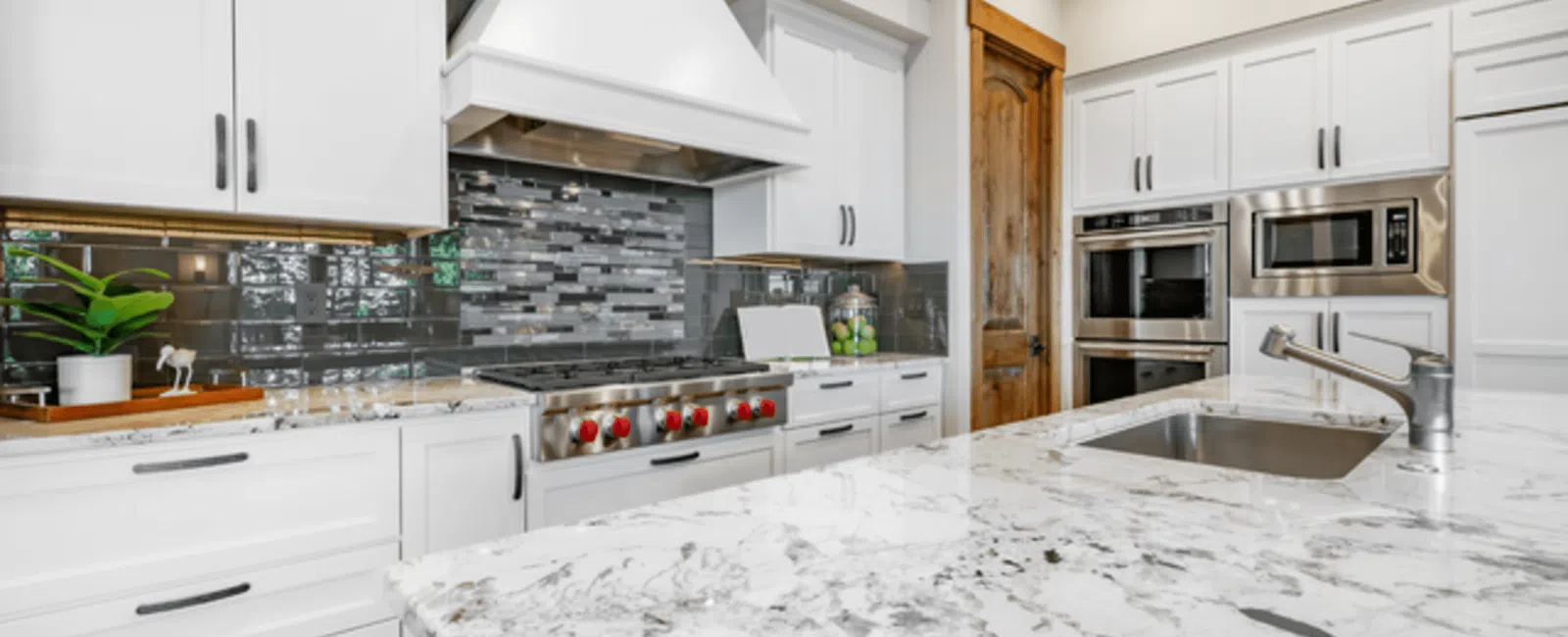
You picked quartz because everyone said it was low-maintenance, and they were right. It's one of the easiest countertops to keep looking new, as long as you steer clear of a few things that quietly ruin the finish. Here's exactly how to clean it, what to skip, and how to keep that showroom shine.
Why Quartz Is So Easy (and Why It Still Needs Care)
Quartz is an engineered stone, made from about 90 to 95 percent ground quartz blended with resin. That resin makes it non-porous, meaning it has no tiny pores for liquids to soak into.
Since nothing soaks in, quartz resists stains and bacteria and never needs sealing, unlike granite or marble.
The catch is that resin is fragile. Harsh chemicals, abrasive substances, and high heat all break it down, and once the finish dulls, no cleaner can restore it. Low-maintenance, it turns out, is not the same as no-maintenance.
The Daily Routine: Keep It Simple
For everyday cleaning, less is more:
- Use mild dish soap and warm water with a microfiber or soft cloth.
- Wipe down the surface after cooking or meal prep to clear crumbs and spills.
- Rinse and dry with a clean towel to avoid streaks and hard-water spots.
That is genuinely it. No special spray required, though a dedicated quartz cleaner is fine if you want to keep one on hand.
What to Keep Away From Your Quartz
A few common products do real damage, so keep these off the counter:
- Bleach, ammonia, and oven or drain cleaners. Their harsh chemistry can discolor and dull the resin.
- Vinegar, lemon, and other acidic cleaners. Handy elsewhere in the kitchen, but rough on quartz over time.
- Abrasive pads, steel wool, and scouring powders. They scratch the surface, leaving dull spots.
When in doubt, reach for soap and water.
Spills, Stains, and Stubborn Spots
Quartz is non-porous, but letting spills sit can still leave a film, especially coffee, wine, or oil. Wipe them up sooner rather than later.
For dried-on gunk, gently lift it with a plastic scraper rather than scrubbing. For a stubborn mark, a little non-abrasive, ammonia-free glass cleaner or a 50/50 mix of isopropyl alcohol and water usually does the trick. No elbow grease required.
Two Habits That Protect the Finish
Cleaning is only half the job. Two small habits prevent the kind of damage a cleaner can't undo:
- Use trivets and hot pads. Quartz is durable but not heatproof, and a pan straight off the stove can scorch the resin, leaving a permanent mark.
- Cut on a board, not the counter. Quartz resists scratches, but knives can still dull the surface over time.
Protect the resin, and your quartz will hold its shine for decades.
Quartz Countertop Cleaning FAQs
Can I use vinegar on quartz? Not regularly. Vinegar is acidic and can slowly dull the resin, so stick with mild dish soap and water.
Does quartz ever need sealing? No. Quartz is non-porous, so it never needs sealing, which is one of its biggest perks.
Are disinfecting wipes safe on quartz? Some are, but avoid any that contain bleach or heavy chemicals, and rinse the surface with water afterward.
See Quartz in Person
Thinking about quartz for your kitchen or bath, or want to see the colors up close? At Design Tops, we've helped Maryland homeowners choose and install countertops they love since 1985. See samples in our showroom or schedule a free consultation, and we'll walk you through every step, start to finish.